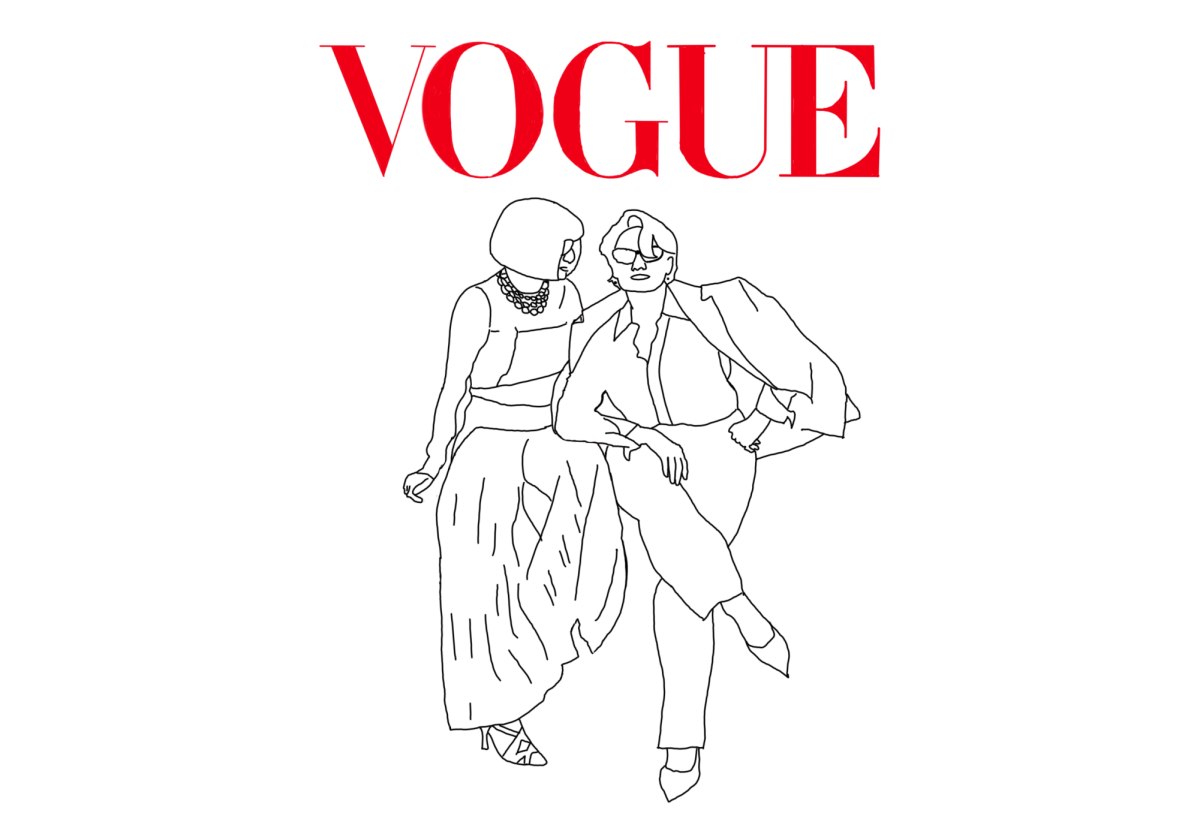
Before “The Devil Wears Prada” became the ‘it’ fashion movie of the 2000’s, ‘it’ existed as something completely different: a barely disguised peek into what lies behind the doors of the elusive Vogue. Back then, fashion’s power structure was basically a locked vault – all gloss, no access. The fashion fans saw the covers, the runways, the carefully selected pieces and the glamour but never the machinery humming underneath. Prada changed that. It didn’t just entertain; it pulled back the curtain on an industry that had always thrived on mystique, revealing the precision, the pressure, the flaws and the brilliance that kept an empire like Vogue running.
And at the center of that universe stands the formidable, incredulous Anna Wintour, the editor-in-chief whose influence has shaped fashion for decades and who has inspired one of cinema’s most unforgettable characters.
To understand why the sequel has stumbled so much, you have to understand where the franchise originated. In 2003, author and former Wintour assistant Lauren Weisberger published her debut novel, “The Devil Wears Prada,” a fictionalized account of her time working as an assistant to Wintour. The book follows a young woman navigating the demands of a powerful, impeccably dressed editor who seems to operate on both genius and intimidation. The fashion world immediately recognized the silhouette: the bob, the sunglasses, the cool precision all pointed to Anna Wintour – even though the book never mentioned her name.
Then, in 2006, fashion fanatics were graced with the film which did the impossible. It didn’t just bring the story to life; the movie ended up being better than the book itself. Meryl Streep’s Miranda Priestly wasn’t a satire. Streep grounded her in realism, making her more complex than just a parody of Anna Wintour. The movie became a cultural touchstone, cementing Miranda Priestly’s character as one of the greatest fictional power figures to exist.
Now, 20 years later, we have the long-awaited sequel, and it’s a film that seems to have forgotten what – or should I say who – made the original film iconic.
Neither the drama nor the real-world stirrings ended with the first movie; of course, they didn’t. The fashion world has practically vibrated with fear and fascination for the last twenty years. Designers whispered fears of upsetting Wintour like she was Voldemort in couture. In fact, the production designer didn’t just “take inspiration” from her office; he allegedly snuck in and copied down the layout from the flowers on her desk down to the placement of her glasses. Which Wintour reportedly changed immediately after seeing the film. This was almost as iconic as her showing up to the premiere in a full Prada outfit, a move so pointed it may as well have been a press release.
But the world Miranda Priestly ruled in 2006 simply doesn’t exist anymore, which is exactly where the sequel missed its greatest opportunity. Editors who once held absolute power now share the stage with influencers, algorithms and a trend cycle that moves faster than a sample rack during Fashion Week. That’s exactly what makes a sequel in Miranda’s world so intriguing, or rather, what should have made it intriguing.
Instead we’re given a Miranda who’s…nice?
Approachable?
Just tired? Maybe even overworked.
As if someone replaced her with a woman who shops at the airport’s Hudson Group.
And Amari (Miranda’s assistant) telling her what she can and cannot say?
Unacceptable.
The 2006 Miranda would’ve ended that conversation and her job with a single glance.
Meanwhile, Nigel seems to have finally gotten the character development he deserved, and our little Andy has grown a backbone, which is a refreshing change to her character. Nigel being the reason for Andy’s return to Runway is a twist that actually works and highlights their friendship. But Miranda’s entire personality and wit seem to have been the cost of their growth.
And Emily? (Who else read that in Miranda’s voice?)
The sequel treats her like a villain without giving her the wardrobe, attitude or evolution to justify it. In the first film, she idolized Miranda and Runway; she loved her job. And then suddenly out of the blue, she’s the antagonist but is still dressed and acting like an assistant. No snark. No bite. No growth. Just a sudden, random villain complex that feels completely unearned.
The film does attempt relevance, it addresses real issues affecting journalism: AI, the collapse of traditional media (like paper magazines) and the chaos of the internet era. Important? Most certainly. But the movie leans so heavily into these themes that it forgets it’s supposed to be about fashion. The Runway fashion show scene focuses more on Lady Gaga’s performance than on the clothes and for a fashion movie, that’s a cardinal sin.
However, there are adorable sprinkles of nostalgia, little moments that only fans of the original will catch. And the full‑circle moment of Andy writing the novel about Miranda is genuinely sweet. But the nostalgia comes at a price: the film never pushes past the first one. It’s stuck in its own shadow. The franchise is stuck in a loop.
Then there’s the moment that should be illegal in every country ever:
Miranda Priestly flying economy.
Economy.
Miranda Priestly.
I gasped, audibly, loudly.
It’s despicable, it’s absurd, it’s plain character assassination.
The film duology has always reflected a deeper tension within the fashion industry: the push‑and‑pull between tradition and reinvention. The first film captured the glamour and brutality of a world obsessed with perfection. The second had the opportunity to explore what happens when that world is forced to evolve.
Instead, it gave us a Miranda who seems done, while Andy gets all the good ideas.
So yes, the “Devil Wears Prada 2” is technically here, but honestly? I would rather think of the original as a standalone.
Yes, it’s rooted in real fashion history, real personalities and real behind-the-scenes drams.
But it also commits the gravest fashion faux pas of all:
It forgot the power of the woman who made it iconic.
And the fashion world is far less interesting when Miranda Priestly isn’t allowed to be Miranda Priestley.