While dancers rehearse for 2025’s annual production of The Nutcracker, on the 20th anniversary of the show, the tech theatre crew has been busy building and practicing operating the show’s core, with the officer team meeting over the summer to discuss the production. The team has been doing everything from rebuilding the scenes from last year by hand to mixing the audio from the entire Chap orchestra.
Planning began in July, when the officer team had to figure out all the logistics of fundraising and finances.
“Our team always meets really early to plan,” TEC theatre president senior Devin Schueppert said. “We start in the summer finding sponsors from the local community, like restaurants, and hanging posters around town to advertise the show.”
Set construction began in November, where the tech theatre students put together much of the scenes for the final show, primarily for the first half. At the same time, the music and lighting teams also start meeting to perfect their roles.
“In December, we start taking pieces out of storage to get them ready for the show, such as the collapsible Christmas tree seen in Act 1,” Schueppert said. “The cast, crew and musicians get together for rehearsals four days before the first performance to practice scene changes, lighting cues and flying scenery in and out.”
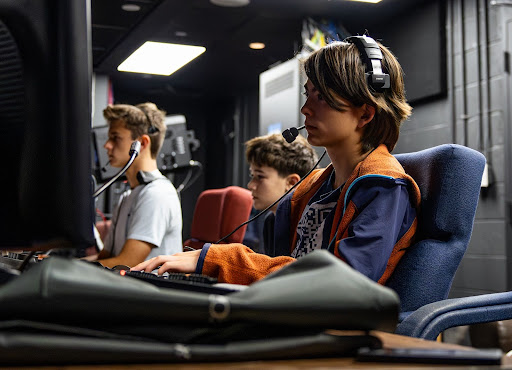
Schueppert especially loves his role in audio design. Audio design for the production includes combining each instrument in the orchestral track perfectly, to ensure the sound is balanced.
“I love mixing audio because it’s like a puzzle trying to make space for each instrument, which is why I plan on majoring in theatrical sound design in college,” Schueppert said.
The tech theatre team doesn’t just do props and audio: they’re involved in almost every aspect of the final production.
“Tech theatre is behind all of the technological aspects of the show,” fly operator senior Michael Peays said. “We not only run the light, sound and props, but we also run the logistics for seating and ticket sales. Everything other than the dancing is fully done by Westlake Tech Theatre.”
During performance week, about 40 technicians staff each show. Their responsibilities include operating the fly system, managing traffic, calling cues and monitoring equipment throughout both acts.
“My role is fly operator,” Peays said. “Above the right wing of the stage we have a fly system, which is essentially a rope system allowing us to fly rails in from the ceiling. We attach lights, props or even screens to them, and my role is to bring them in and out.”
The work is mostly unnoticed by audiences, but it determines whether the production even runs in the first place. For the students in the booths and backstage, a successful night is one where no one notices.