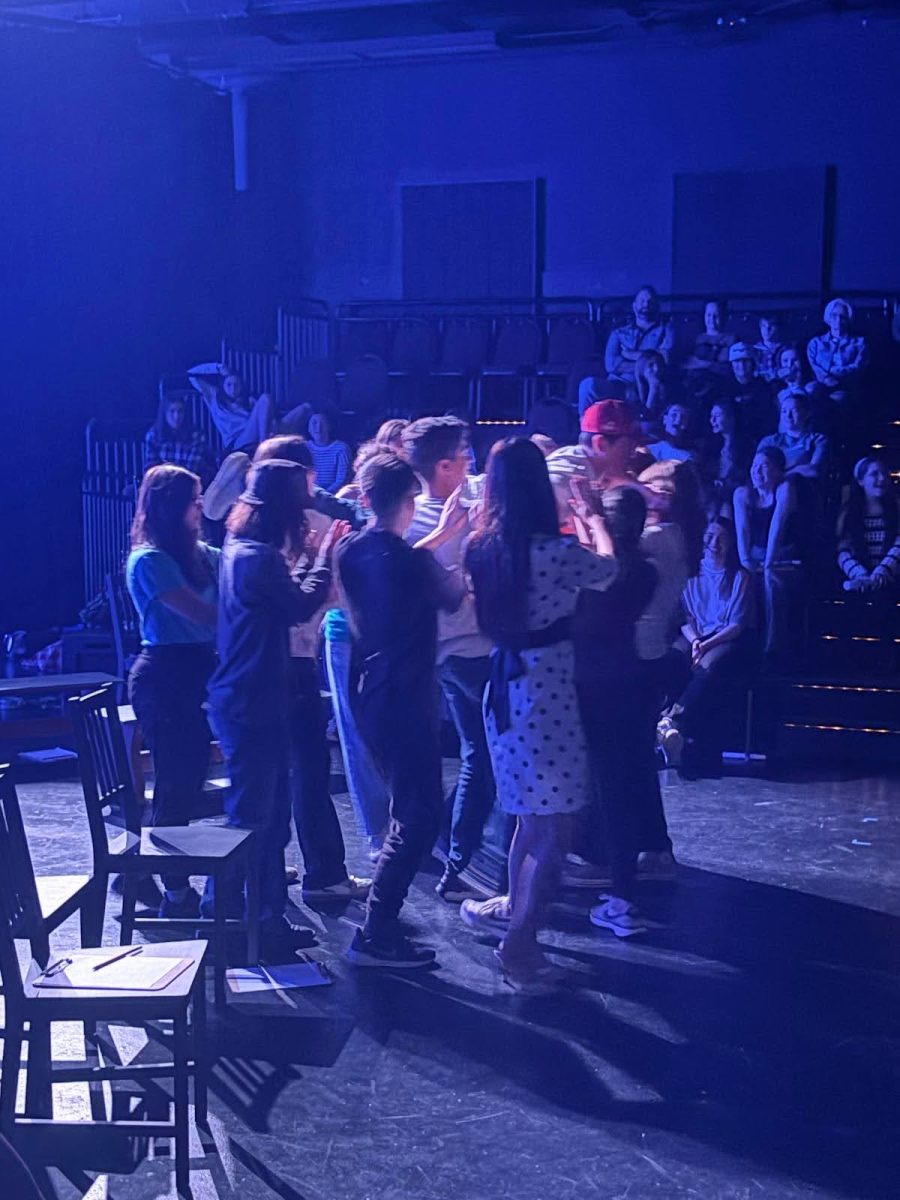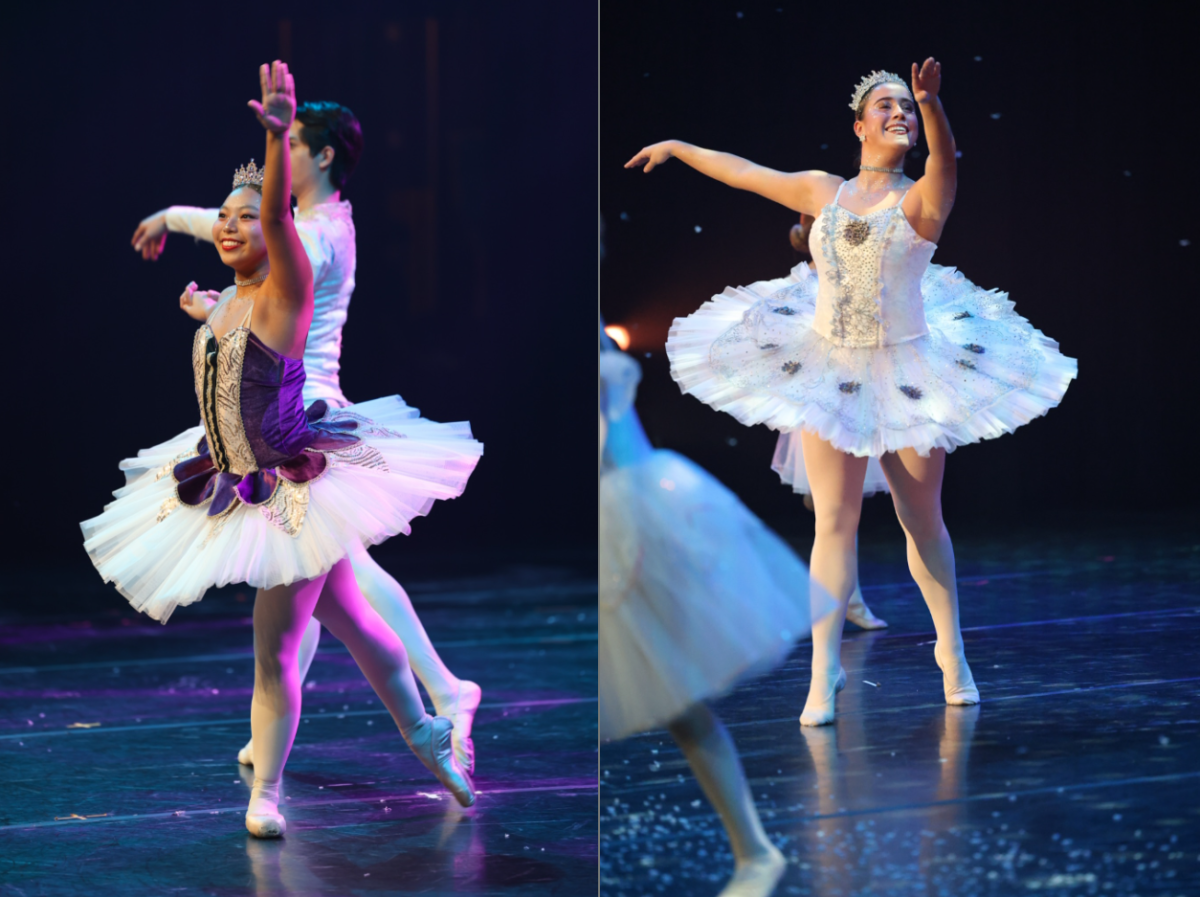
Backstage before the Nutcracker Spectacular begins, there’s an organized madness. Food lines the walls for performers to grab and bring back to the dressing rooms. Inside the dressing room, makeup and costumes wait to be borrowed and shared amongst the dancers.
Senior Brooke Frischhertz feels a mixture of excitement and nervousness as she peers past the curtains to the packed auditorium in the PAC. It’s a “fight or flight” moment for her.
“Once I get on stage, I just black out that there are people in front of me and I just try to get through the dance while staring at the spotlight,” Frischhertz said. “I feel like that’s what helps me the most when I’m scared on stage.”
For Frischhertz and fellow senior Jessica Lin, this year’s Nutcracker production and dance season, marks the end of an era. After 10 years of dance, they are preparing to take their final bows as high school dancers, with Lin as the sugar plum fairy and Frischhertz as the Russian soloist and rat queen.
The winter Nutcracker Spectacular performances are part of Frischhertz and Lin’s larger commitment to a protégé program at local Alisa’s Dance Academy, which is a company that trains students on a pre-professional track.
“I have honestly learned everything from dance, actually everything,” Frischhertz said. “I have learned time management and I think dedication through dance. I also feel like we’ve watched a lot of people leave dance over the years, and I think we’ve learned our dedication and love for dance through our time in the studio. You also learn a lot of creativity and stuff like that when you grow up doing dance.”
Protege dancers dance for a minimum of 15 hours a week, along with other requirements to stay active throughout the year. This can consist of guest choreographers, weekend conventions and camps over the summer. Every other year, the company has one out-of-state convention they attend for extra training and networking opportunities. The structure of the company is also designed to be integrative, intentionally blending different age groups.
This focus on thorough teamwork and mentorship also develops valuable communication skills.
“Through dance we’ve also learned good communication skills, not even just with the coaches, but also with the younger girls too,” Frischhertz said. “We are constantly surrounded by them and we have literally been shoved into leadership roles since we were sophomores. I think that has really changed both of us for the better for the most part and I think it’s just a good skill to have.”
Despite their love for the sport, the demands of their schedule can be often overwhelming, especially as seniors. The dancers’ only significant free time is during the summer. During the school year, they usually get home around 9:30 or later, and then they have to study and finish any remaining homework.
“Brooke is really good about getting her work done at school,” Lin said. “She’s super good about locking in and finishing everything. I’m the exact opposite. I don’t do any work at school, and I end up doing it eventually.i It just adds to my lack of time in the day.”
Right now, the pressure is mounting as they are about to start competition season, which typically begins in January or February, when nearly every weekend is filled with something dance-related. As the workload gets progressively more draining, added on to the stress, there is a lot of school work, and with senior year, it’s hard to stay on track.
The rigorous competition schedule, however, is a pay off for all the time and stress.
“We usually end competitions at really late hours,” Frischhertz said. I remember one time we got home at 2 a.m., and I was so tired after competing all day.”
The one down side to competitions is that there is no wifi backstage, so dancers will have several hours until they compete in their next section and because of that, everyone is sitting there trying to pass the time. Usually they choose to go out randomly and get food with the team in the meantime.”
Looking forward to the future, their childhood dance journey is wrapping up, and now they’re focusing on trying out for college dance teams or programs, eager to continue their passion in a new chapter of their lives.
As she looks toward this transition, Frischhertz offered a final piece of advice for those continuing their dance journey.
“My biggest advice would be to show up consistently and have some grace,” Frischhertz. “It’s easy to get frustrated with dance, especially if you continue with it as you grow up; it’s important to have grace in order to prevent burn out.”