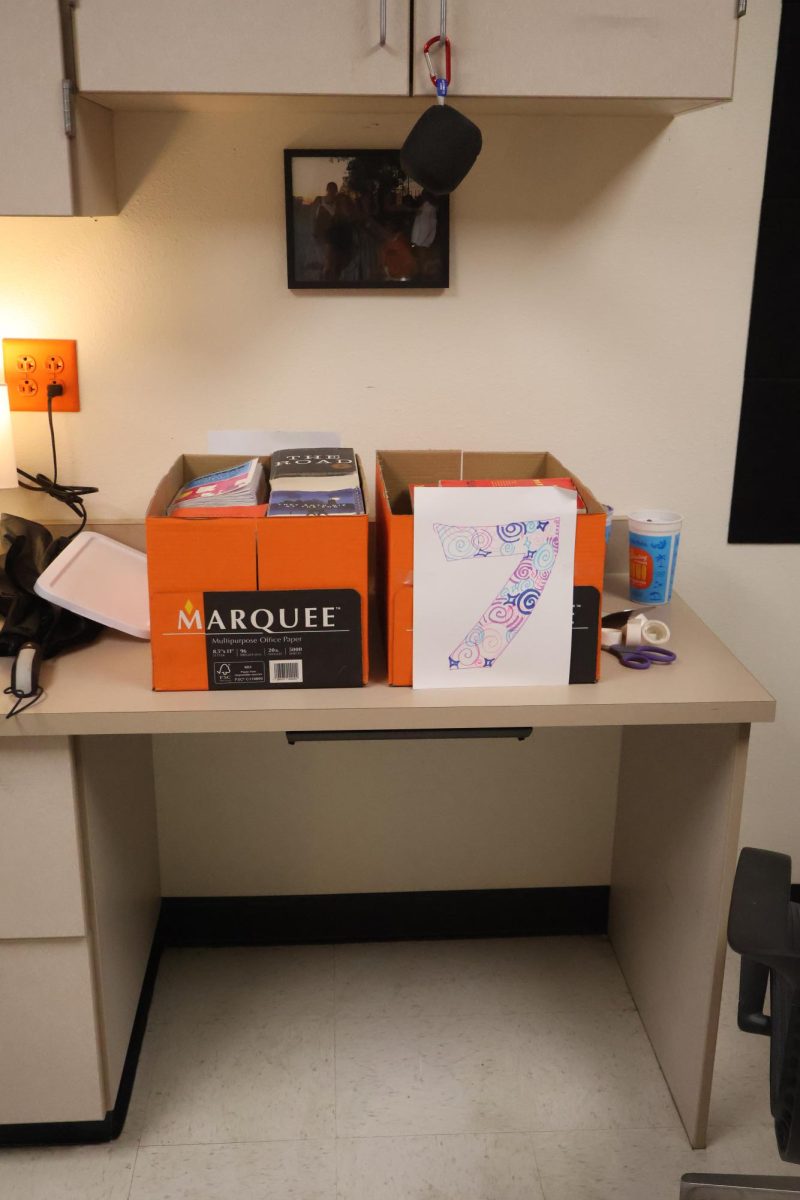
The number “67” has become more than just a number: it’s this year’s word of the year. However, its impact in schools depends on who you ask and what they teach.
Some teachers can’t get away from the “67” jokes while others, even if they deal with the two numbers daily, claim it hasn’t reached their classrooms. Which leaves the teachers to decide whether they should embrace, ignore or endure the fad.
“It hasn’t really come up at all,” Honors Algebra 2 teacher Adele Peterman said.
While she’s aware of the meme she believes that, from a mathematical perspective, picking these two numbers don’t make sense.
“The better choice would have been four, six, because it’s right in the middle,” Peterman said.
Peterman added that none of her 32 eighth graders she teaches at Westridge have mentioned it, nor have any of the freshmen she teaches.
However, English III and IV teacher Alexa Roddenberry, is having somewhat of an opposite experience in her classes. She said that the number comes up all the time in her classroom. Students have made it a habit of weaving it into the lessons, conversations and even scribbling it onto desks or her whiteboard.
“Literally every single day, it’s constant,” Roddenberry said.
Even casual mentions of the numbers six or seven spark major reactions from her students, turning ordinary lessons into opportunities for interruptions. The older students, she added, are especially enthusiastic when the numbers come up.
“The seniors are worse about it,” Roddenberry said.
That intensity has spilled into every lesson, with her seniors finding ways to insert the number into the most random of moments.
“When we were reading Macbeth, I asked the class to take a look at line 60, and they asked if we could stop at line six-seven instead,” Roddenberry said.
For her, the popularity of “67” is part of a larger cycle of generational quirks. She sees it as the latest in a long line of number-based trends that were tied to music and pop culture, mentioning earlier trends like “369.”
Despite its immense current popularity, she doubts the trend will last. She thinks it’s going to fade just as quickly as it appeared, to be replaced by whatever comes next in student slang.
“It’ll die,” Roddenberry said. “All trends die. In the meantime, teachers will simply have to wait it out.”