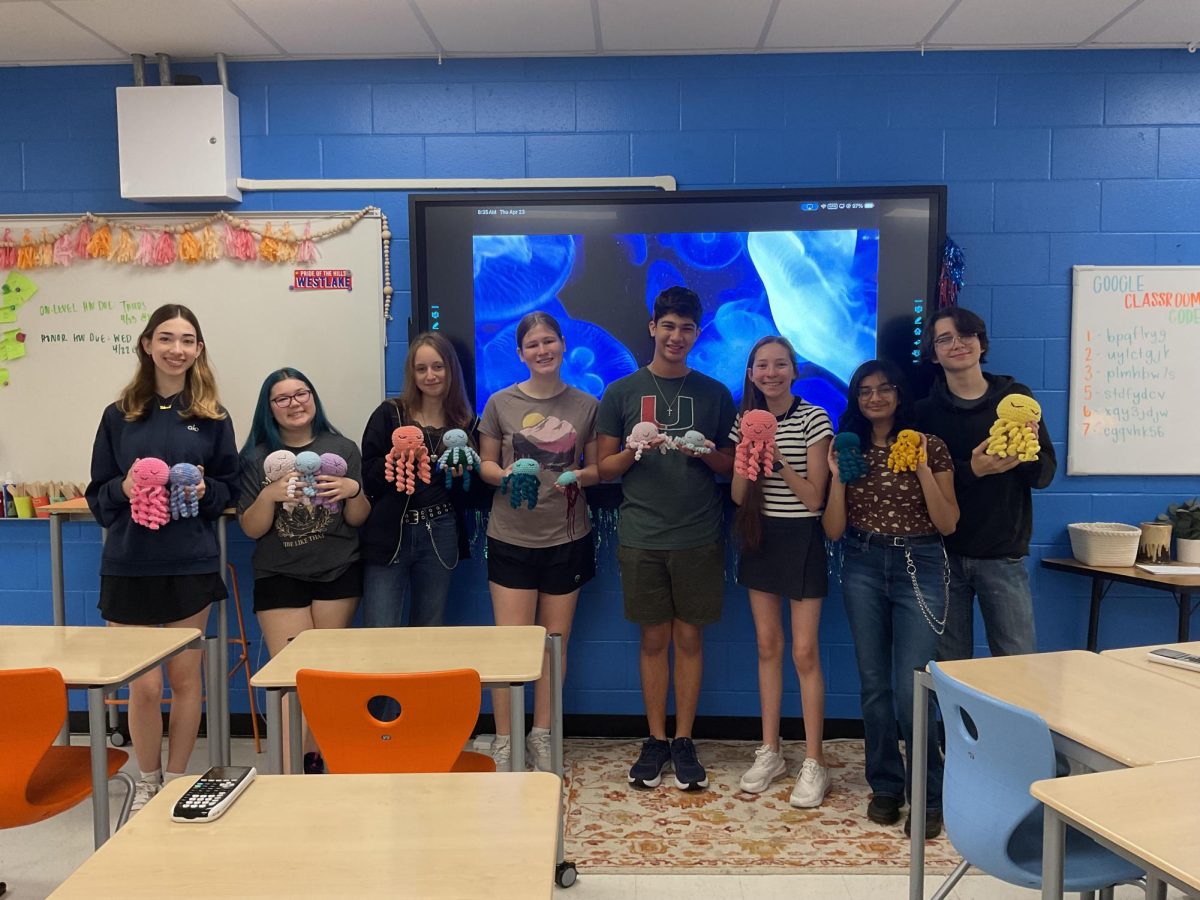
The Final Draft students didn’t find out who their new teacher would be until a week before the start of this school year according to junior Co-Editor-in-Chief Isabella Alcala.
The departure of former advisor and art teacher Moira Longino following the 2024-25 school year forced students of The Final Draft to figure out how to keep the literary magazine going. The publication’s student staff, not their advisor, met with the Fine Arts and English Departments to ask for access to computers and other basic needs for the class.
On top of their advisor leaving, students are also anticipating increased budget cuts, which have been an underlying issue for the team tasked with assembling a 40-or-so page magazine by April.
In the past, Longino and her students fundraised to support printing the magazine, while at the same time contemplating the possibility of going fully digital. Now, that decision is fully in the hands of students.
“It’s definitely a lot harder not having a guiding force there, and having to do everything independently this year, rather than having somebody else who can fight our battles with administration and whatnot,” Alcala said.
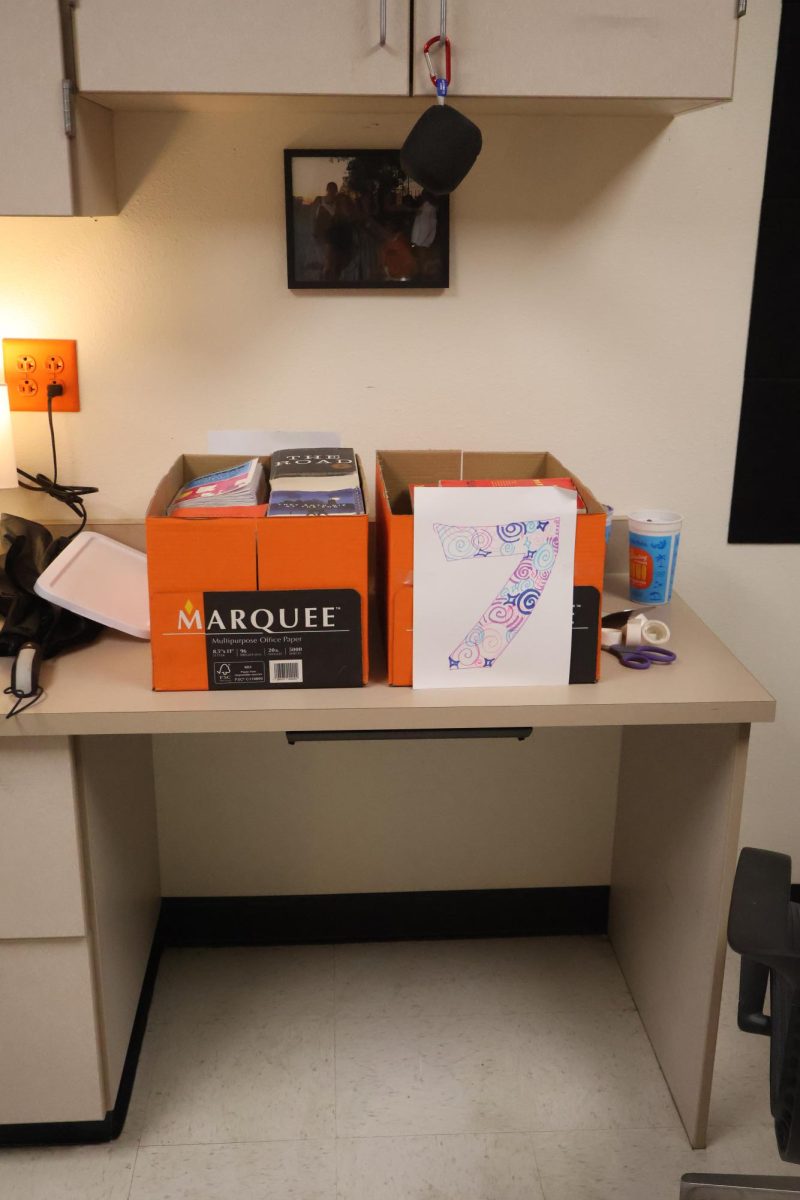
The Final Draft is almost entirely student led, to the point where the editors create assignments and assign grades. It’s a stacked class situated in the journalism computer lab, with English teacher and new magazine advisor Deighton Zerby teaching both Creative Writing and Literary Magazine at the same time.
“I thought Ms. Longino’s leadership was pretty laid back, hands off,” junior Creative Director Cameron Harmon said. “This is even more laid back, hands off.”
Zerby, like the students, only found out he’d be advising the literary magazine a week before school started. He’s an adviser for the program, but the creative process is left to the editors.
“[When it comes to] trying to find resources to carry out what [editors] decided for the scope of the magazine for the year, I would help with that,” Zerby said. “As far as designing benchmarks [and] goals, that’s all student-led. I never was given any sort of ‘this is the way it needs to be done’ year to year plan.”
This year will mark the 43rd annual edition of The Final Draft. Editors, a team of five, collect student submitted artwork, photography and writing throughout the first semester, laying out the magazine and designing final spreads in the second semester. Senior Editor-in-Chief Vanessa Law is in charge of organizing the small crew.
“When you have such a small group of people, everyone needs to contribute,” Law said. “Whereas last year, we had a group of 14, and if you were [a] slacker, it didn’t really matter. So the buffer this year is a lot less.”
At the same time, a smaller crew is easier to manage, and can streamline the process of making a magazine. It also assures that everyone’s voice is heard, which is important for new editors like freshman Vikki Suryaprasad.
“It’s less overwhelming being in a small group compared to a big class,” Suryaprasad said. “And if you need help with something, [EICs will] come to you immediately, insteading of having to go through 15 other students before you.”
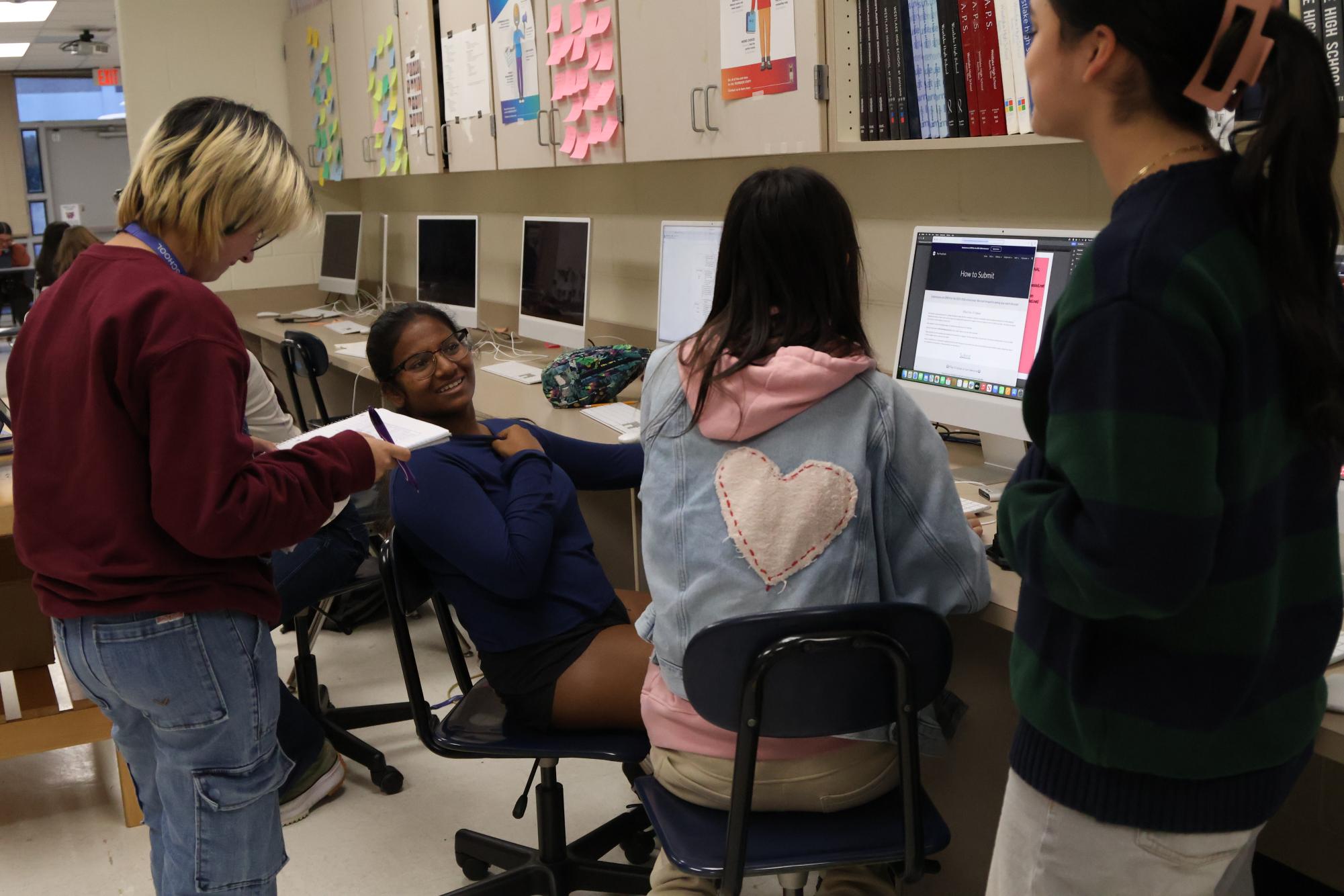
The EICs create assignments for first year students and teach them how to use design software, sending grades off to Zerby. The Final Draft’s self-paced nature makes the class a unique opportunity for students.
“I feel like [this class] is a place of appreciation for my labor,” Law said. “If you submit homework to a class, your submission means nothing to the teacher,” Law said. “[Here], they value your input.”
Even when compared to other writing and art electives, The Final Draft stands out as a creative outlet unbounded by the typical structure of high school.
“It’s a creative output without having to actually make the art or writing,” Alcala said. “You still get to be creative without having the pressure of being graded on technique or writing style.”
Still, the program’s laid back attitude has posed challenges for the editors, especially this year without the frequent guidance of a teacher advisor.
“We don’t know who to ask when we have questions — about the printing process, how we should run certain things or assignment ideas,” Alcala said.
In spite of these challenges, editors are more eager than ever to harness the small but efficient crew and forge a great end product.
“I think this year’s magazine will be more aggressive than in past years when there have been more people,” Harmon said. “It’s easier now to say: This is what we want to put out.”
The editors are optimistic about the future, but want to focus on what they can achieve this school year.
“I think next year will be really good because we have members that are already experienced,” Law said. “Any time after that depends on how they lead, or how much effort they put in. [The] only thing I care about is doing my best at this current moment.”